Why eat comb honey?
Try this: If you can get some honey in the comb, cut off a piece and place it in your mouth.
Just let it rest on your tongue for a moment, savoring the bit of honey dribbling from the cells that were just cut.
Now, slowly crush the comb between your tongue and the roof of your mouth.
One by one, the delicate, gossamer-thin walls of the wax cells burst, releasing their treasure of flavor and aroma.
The last living things to touch that honey were the bees that made it.
The last time that honey was exposed to the air was in the atmosphere of the hive.
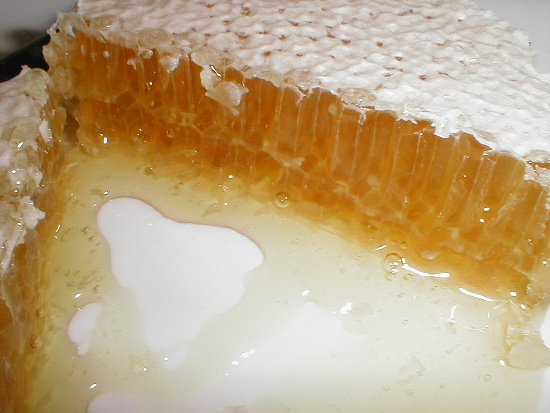
You are experiencing honey in its truest, purest, most delectable form.
No other form of honey can match honey in the comb for delivering the exquisite flavors and aromas of honey in a completely immaculate and natural form.
That’s why you should eat comb honey!
What About the Wax?
Beeswax is a completely edible substance.
Swallow it with the honey, or savor the taste of the honey long after you’ve swallowed it by chewing the wax residue just like chewing gum.
You can also use honey comb just as you’d use liquid honey, spreading it with a knife, wax and all.
A real treat is spreading the honey comb on piping hot biscuits, with the wax melting and mingling with the honey and butter.
Oh my!
You can also stir a chunk into a hot bowl of oatmeal. The wax just melts away, releasing the pristine sweetness of the comb honey and turning your oatmeal into a tasty treat.
And I often use it in this breakfast smoothie recipe.
Types of Comb Honey
Unfortunately, honey in the comb can be difficult to find in some areas.
Not as many beekeepers produce it as in times past, and it’s very rare to find it stocked in grocery stores (I don’t recall ever having seen it in a supermarket).
But wherever it is sold, it will be one of two types: section or cut comb.
Section honey is sold in round or square containers. The section frames are made of either wood or plastic, and the bees build the comb directly in the frames.
Cut comb is simply pieces of honey comb that were cut from a larger piece of comb and packaged individually for sale.
They are all essentially the same from the consumer’s perspective, but the production techniques of each differ considerably.
Want to Buy Some?
Unfortunately, that might be difficult.
As I noted above, I’ve never seen it in a grocery store. And not a lot of beekeepers produce comb honey.
(I do. The beautiful example above is from one of my hives. But I don’t produce enough to sell. Sorry!)
And those that do sell it usually have it on just a seasonal basis.
Several honey producers do sell comb honey on Amazon.com, though again, availability is spotty.
And fair warning: it’s pricey stuff!